


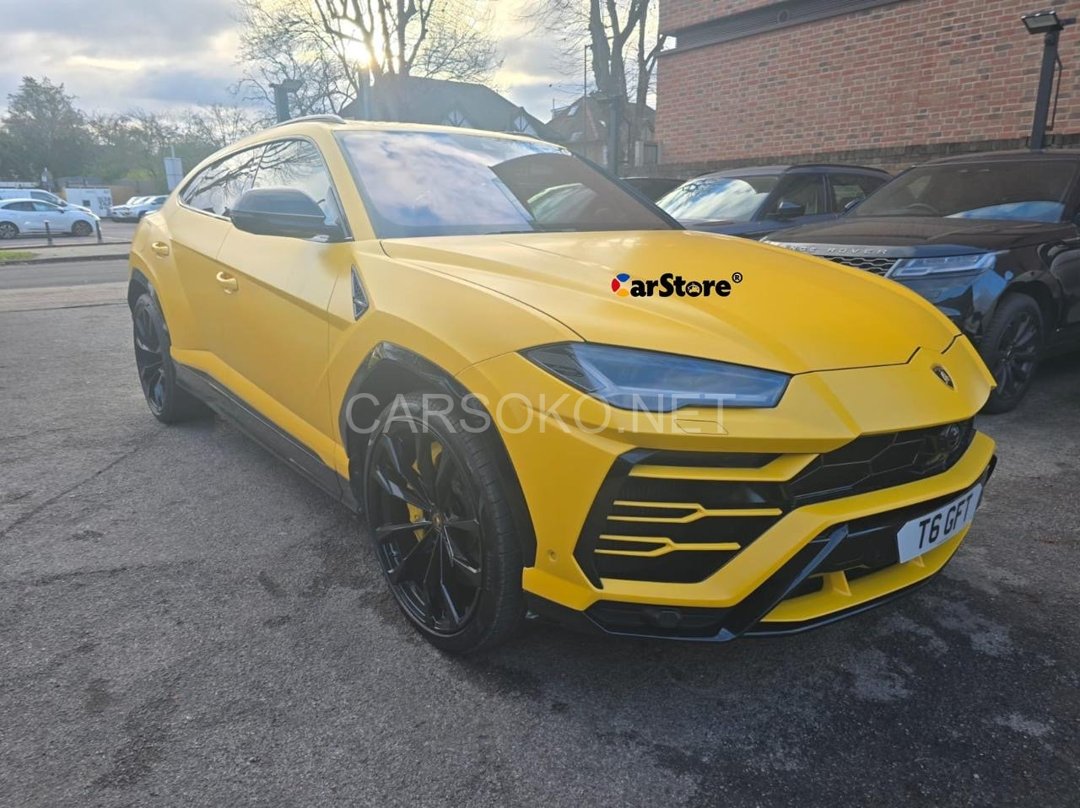
The Urus is the vehicle that made Lamborghini relevant to people who would never buy a Huracan or Aventador. That's not a criticism. It's an accurate description of what it does commercially and why it matters to the brand. More than 50% of Lamborghini's global sales are now Urus. The sports car purists are uncomfortable with that. The buyers who drive one daily are not.
In Kenya, the Urus has established a presence that would have seemed unlikely a decade ago. There are enough examples on Nairobi's roads now that it no longer stops traffic the way it did when the first ones arrived. That normalisation is its own kind of statement about where Kenya's premium automotive market has gone.
What Makes the Urus Different from Other Luxury SUVs
The Urus shares its MLB Evo platform with the Bentley Bentayga, Audi Q7, Porsche Cayenne, and Volkswagen Touareg. On paper that means it has the same bones as several vehicles we've written about before. In practice the Urus does something genuinely different with those bones.
The 4.0 litre twin turbo V8 produces 641 horsepower in the standard Urus and 666 horsepower in the Urus S launched in 2022. Zero to 100 kilometres per hour takes 3.5 seconds. The top speed is 305 kilometres per hour. These numbers are not meaningful in Kenya's traffic conditions. What is meaningful is how the engine feels at the speeds you actually drive, and at ordinary speeds the Urus's V8 has a character that no other SUV offers. The exhaust note alone is in a different category from anything else at this price.
The handling was what surprised people when the Urus launched. Lamborghini's engineers took the shared platform and recalibrated almost everything: steering, suspension geometry, brake bias, active roll stabilisation. The result is an SUV that changes direction at a speed and precision that feels closer to the Huracan than to a Range Rover. It's genuinely unsettling the first time you push it into a corner. In a good way.
Lamborghini Urus Price in Kenya
|
Urus Variant |
Price Range (KES) 2026 |
|
Urus standard, 2019 to 2021 |
45M to 65M |
|
Urus standard, 2021 to 2022 |
60M to 80M |
|
Urus S, 2022 to 2023 |
75M to 100M |
|
Urus S fully specified, 2023 to 2024 |
90M to 130M+ |
|
Urus Performante |
100M to 150M+ |
Brand new Urus models imported through official channels carry a landed cost that pushes well above the used market figures shown here once all applicable duties, excise, VAT, and registration are applied. The used market offers the most accessible entry point for Kenyan buyers at this level.
The Interior and Daily Usability
The Urus cabin is a strange and interesting space. It's unmistakably Lamborghini from the hexagonal shapes, the fighter jet inspired switch layout, and the quilted leather surfaces. It also has to work as a practical vehicle for people who use it every day, and Lamborghini navigated this better than expected.
The infotainment runs on the Audi MMI architecture from the shared platform, which means it's familiar, functional, and not particularly exciting for a car at this price. There are two touchscreens, wireless connectivity, and all the technology that a premium buyer in 2026 expects. None of it matches the theatre of the exterior or the exhaust note. That's a fair trade-off.
Rear seat space is adequate for two adults. The boot is 616 litres, which is usable. This is not a family hauler in the way a GLS 450 or Range Rover is. It carries people and luggage. It does not do so with the same spacious grace as a three row SUV.
Ownership in Kenya
Lamborghini service in Kenya runs through a dedicated authorised service centre in Nairobi. The technicians are factory trained and the diagnostic equipment is proprietary. Service costs are substantial and should be fully budgeted before purchase. A major service on an Urus involves labour rates and parts costs that reflect the vehicle's position at the top of the automotive market.
Tyre costs are a specific consideration. The Urus runs large, performance-specific tyre sizes that are not stocked widely in Kenya. Replacements are ordered rather than picked from a shelf. Buyers who experience a tyre failure outside Nairobi face a more complex logistical situation than they would with a more conventional vehicle.
Fuel consumption averages 15 to 20 litres per 100 kilometres in mixed driving. At KES 220 per litre for premium fuel in 2026, a buyer covering 2,000 kilometres per month spends between KES 66,000 and KES 88,000 per month on fuel. This is the cost of the engine character.
Who Buys an Urus in Kenya
Buyers who want a supercar's performance in a body that accommodates daily life without asking them to choose between those things. The Bentayga buyer wants luxury and craftsmanship. The Urus buyer wants performance and presence. They overlap in price but they're buying different experiences.
At Car Store, we source Urus models from verified international markets with full documentation and service history. The process at this level is specific to the individual vehicle and the individual buyer. If you're interested, contact us directly.
Enquire about Lamborghini Urus availability at Car Store Kenya. Verified, documented, performance delivered. Visit: www.carstore.co.ke